
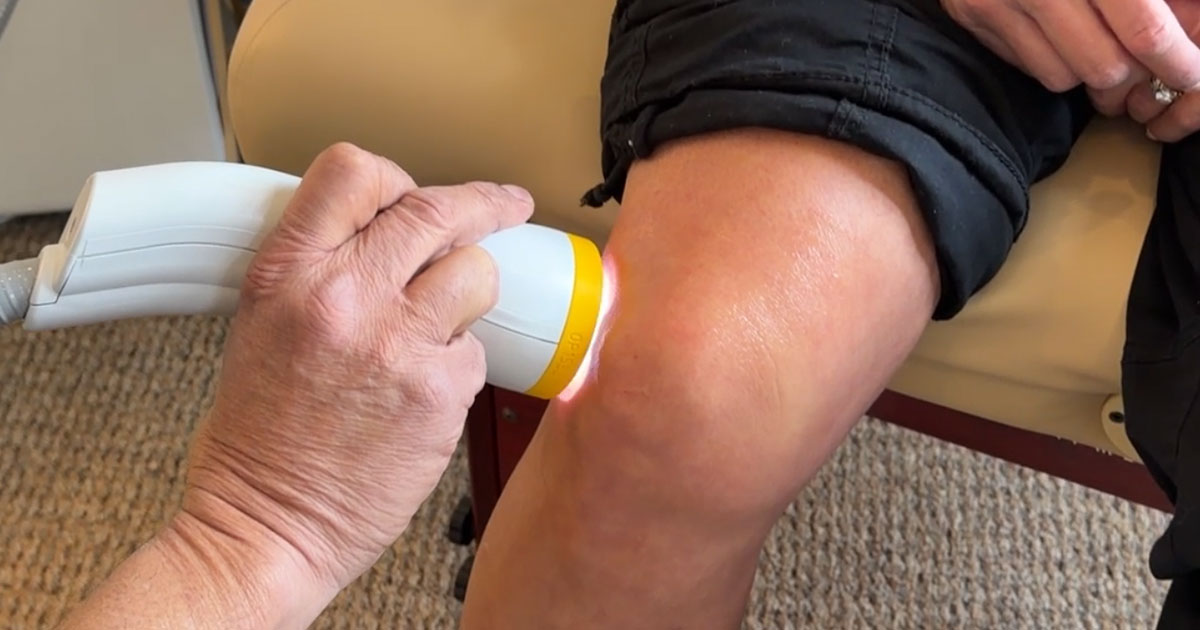
Regenerative Medicine at Juniper Health and Wellness
Learn how SoftWave Therapy works, what regenerative medicine means, what conditions it may help, and how to know if you may be a candidate for SoftWave Therapy in Mequon and the North Shore Milwaukee area.
Pain can change how you move through your day.
It can make it harder to walk, exercise, work, sleep, golf, play pickleball, lift your child, climb stairs, or simply enjoy normal life without thinking about every step.
For many people, the frustrating part is not just the pain itself. It is feeling like the only options are to wait it out, take medication, avoid activity, get injections, or eventually consider something more invasive.
But there is another category of care many people are now asking about: regenerative medicine.
At Juniper Health and Wellness in Mequon, SoftWave Therapy is one of the regenerative tools we offer to help support the body’s natural healing response, improve local circulation, activate connective tissue, and help people move toward better function.
SoftWave Therapy is non-invasive, does not involve needles or surgery, and is designed to stimulate a biological response in the tissue being treated.
In simple terms, it helps wake up the body’s own repair process.
Regenerative medicine can sound complicated, but the idea is actually simple.
Regenerative medicine focuses on helping the body repair, restore, or regenerate damaged tissue. The FDA describes regenerative medicine as an approach focused on restoring, replacing, or recreating cells, tissues, or organs to treat or mitigate disease.
For the everyday person, that means regenerative medicine is not just about covering up symptoms.
It is about asking a better question:
How can we support the body’s ability to heal?
That does not mean every problem can be fully reversed. It does not mean every person responds the same way. And it does not mean regenerative therapy replaces all other medical care.
But it does mean the goal is different.
Instead of only asking, “How do we quiet the pain?” regenerative medicine asks, “How do we help the tissue function better?”
SoftWave Therapy is a type of extracorporeal shockwave therapy, or ESWT. “Extracorporeal” simply means the energy is generated outside the body and delivered into the tissue through an applicator placed on the skin.
During treatment, SoftWave delivers acoustic pressure waves into the targeted area. These waves create a mechanical stimulus in the tissue.
That mechanical stimulus triggers a process called mechanotransduction.
That is a big word, but the meaning is straightforward:
Mechanotransduction is how cells respond to mechanical energy.
Think of it like this: your cells are not passive. They respond to signals. SoftWave delivers a controlled energy signal that can help stimulate biological activity in the area being treated.
Research on extracorporeal shockwave therapy suggests that mechanotransduction is a key mechanism involved in tissue regeneration responses, including effects related to blood vessel formation, tissue repair, and cellular signaling.
When an area of the body is injured, irritated, inflamed, or not healing well, the tissue can get “stuck”.
Blood flow may be limited.
The healing process may slow down.
Inflammation may linger.
Movement may become painful.
The body may protect the area, causing weakness or compensation elsewhere.
SoftWave Therapy applies acoustic energy to the area to help stimulate a healing response.
SoftWave research shows it may help:
Increase local blood circulation
Activate connective tissue
Support tissue repair processes
Reduce pain signals
Help the body respond to chronic irritation or injury
Improve function over time
SoftWave has FDA-cleared indications that include activation of connective tissue, increased local blood circulation, treatment of chronic diabetic foot ulcers, treatment of superficial partial thickness second-degree burns in adults, and relief of minor muscle aches and pains.
That is important because it helps clarify what the device is cleared to do and keeps the conversation grounded.
Blood flow is one of the most important parts of healing.
Blood carries oxygen, nutrients, and signaling molecules that help tissue repair. When circulation is limited or tissue is chronically irritated, healing can be slower.
SoftWave Therapy is designed to improve local blood circulation in the treated area. For someone dealing with pain, injury, or slow recovery, that matters because tissue needs resources to heal.
A simple way to explain it is this:
Your body cannot repair what it cannot reach.
Better circulation can help create a better environment for recovery.
Connective tissue includes tendons, ligaments, fascia, and other structures that help support movement and stability.
When connective tissue becomes irritated or injured, it can create stubborn pain patterns.
This is why tendon-related problems can be so frustrating. Tendons often do not heal as quickly as people expect. Pain may come and go. Activity may flare symptoms. Rest may help temporarily, but the issue may return when you start moving again.
SoftWave Therapy’s FDA-cleared indication for activation of connective tissue is one reason it can be relevant for people dealing with stubborn musculoskeletal concerns.
SoftWave Therapy may be considered for a variety of musculoskeletal and soft-tissue concerns, especially when pain, inflammation, poor circulation, or slow healing are part of the picture.
Common areas people ask about include:
Plantar fasciitis
Heel pain
Achilles tendon pain
Knee pain
Shoulder pain
Tennis elbow
Golfer’s elbow
Hip pain
IT band-related discomfort
Rotator cuff-related pain
Tendon irritation
Muscle aches and pains
Sports injuries
Overuse injuries
Joint discomfort
Chronic soft-tissue pain
Recovery from activity-related strain
Extracorporeal shockwave therapy has been studied across multiple musculoskeletal conditions, including tendinopathies, plantar fasciitis, epicondylitis, jumper’s knee, and other orthopedic concerns.
That does not mean every condition or every person will respond the same way. A proper evaluation matters.
No.
SoftWave Therapy is used in sports medicine because athletes are often looking for ways to recover, reduce pain, and return to activity without unnecessary downtime.
SoftWave is technology trusted by organizations across professional sports, including the NFL, NBA, MLB, NHL, UFC, WWE, and more.
That credibility matters, but SoftWave is not only for professional athletes.
Most people who seek SoftWave Therapy are not trying to get back on the field for a championship game.
They are trying to get back to normal life.
They want to walk without heel pain.
They want to play golf without shoulder pain.
They want to go up and down stairs without knee pain.
They want to work out without flare-ups.
They want to pick up their kids or grandkids.
They want to stay active as they age.
They want to avoid letting pain shrink their life.
That is why SoftWave can be a fit for active adults, weekend athletes, busy parents, golfers, runners, pickleball players, people with physically demanding jobs, and anyone who wants a non-invasive option for pain and recovery.
SoftWave Therapy is performed in the office.
A provider applies gel to the treatment area and uses the SoftWave applicator to deliver acoustic waves into the tissue. The treatment is typically brief (5-10 minutes), with little to no downtime. Typically, people return to normal daily activity afterward.
During treatment, patients often feel areas of sensitivity where the tissue is irritated or injured. This feedback can be helpful because it may guide the provider to the areas that need the most attention.
Some people describe the sensation as tapping, pulsing, or pressure. It should be tolerable, but sensitive areas may feel more intense.
One of the advantages of SoftWave Therapy is that it does not require anesthesia, needles, incisions, or downtime.
The number of SoftWave sessions depends on the person, the condition, the severity of symptoms, how long the issue has been present, and how the body responds.
Some people notice changes quickly. Others need a series of treatments before they feel meaningful improvement. In all cases, because SoftWave Therapy is a regenerative therapy, it takes 8-10 weeks for full tissue regeneration.
This is why Juniper Health and Wellness does not treat SoftWave as a one-size-fits-all service.
The better question is not, “How many treatments does everyone need?”
The better question is:
What is going on with your body, how long has it been happening, and what are we trying to improve?
You may be a candidate for SoftWave Therapy if you are dealing with pain or tissue irritation that has not fully resolved with time, rest, stretching, basic care, or activity modification. Or, if you’ve had a recent acute injury and need to speed up the healing process, SoftWave Therapy is ideal.
SoftWave may be worth exploring if you:
Have tendon, ligament, muscle, or joint discomfort
Have pain that keeps returning with activity
Are dealing with plantar fasciitis or heel pain
Have shoulder, knee, hip, elbow, or Achilles-related pain
Want a non-invasive option
Want to support recovery without injections or surgery
Are trying to stay active
Have an overuse injury
Feel like your body is not healing the way it should
Want to know if regenerative medicine may be appropriate for you
You do not need to be an athlete to be a candidate.
You just need to have a problem that may benefit from improved tissue response, circulation, and connective tissue activation.
SoftWave Therapy is not right for everyone.
A proper screening matters, especially if you are pregnant, have certain cancers, have a blood clotting disorder, are on certain blood thinners, have an active infection in the treatment area, have open wounds in certain areas, or have other medical considerations.
This is one reason evaluation is important.
At Juniper Health and Wellness, the goal is not just to offer a treatment. The goal is to help determine whether the treatment makes sense for you.
Many pain treatments focus primarily on reducing symptoms.
That can be helpful. Pain relief matters.
But if the underlying tissue is still irritated, under-healed, or not functioning well, the pain may return.
SoftWave Therapy is different because it is designed to stimulate a biological response in the tissue. That is why it fits into the regenerative medicine category.
The goal is not just to numb the area.
The goal is to help the body respond.
That distinction is important for people who are tired of short-term relief and want to better understand what may be contributing to their pain.
Juniper Health and Wellness is built around a more proactive, relationship-based approach to care.
SoftWave fits that philosophy because it is not just about treating pain after it becomes severe. It can be part of a larger plan to help people stay active, recover better, and support long-term function.
For some patients, SoftWave may be used alongside:
Direct primary care
Red light therapy
Movement support
Nutrition guidance
Hormone or thyroid optimization
Weight management
Recovery planning
Lifestyle changes
Strength and mobility work
Pain and recovery do not happen in isolation.
A sore knee may be affected by weight, strength, inflammation, footwear, activity, hormones, recovery, and how long the issue has been present.
A plantar fascia problem may be connected to walking mechanics, calf tightness, footwear, training volume, or tissue irritation that never fully calmed down.
A shoulder issue may involve posture, overuse, weakness, tendon irritation, or compensation patterns.
At Juniper Health and Wellness, SoftWave is not just a standalone treatment. It can be part of a broader conversation about how your body is functioning and what it needs to recover.
SoftWave Therapy is not magic.
It is not an instant cure.
It does not guarantee that every person will avoid surgery, injections, medication, or other treatments.
But for the right candidate, it may help reduce pain, improve function, support tissue healing, and help the body move out of a chronic pain or slow-recovery cycle.
The most realistic goal is improvement over time.
That may look like:
Less pain with daily activity
Better range of motion
Improved tolerance to exercise
Less morning stiffness
Better recovery after activity
Improved ability to walk, train, lift, or play
Less reliance on short-term symptom management
The exact response depends on the person and the condition.
The best way to know is through a conversation and evaluation.
You may be a good fit if your pain appears to involve soft tissue, tendon, ligament, muscle, circulation, or connective tissue irritation.
You may need a different path if symptoms suggest something more serious, such as fracture, severe nerve compression, infection, major instability, or a condition that requires imaging or specialist care.
That is why the right starting point is not just booking a treatment.
The right starting point is understanding the problem.
At Juniper Health and Wellness, we help patients think through:
Where is the pain?
How long has it been there?
What makes it better or worse?
What have you already tried?
Has there been an injury?
Is there weakness, numbness, swelling, or instability?
What are your goals?
What would meaningful improvement look like?
Is SoftWave appropriate, or do we need more information first?
If you are looking for SoftWave Therapy in Mequon, Wisconsin, Juniper Health and Wellness offers a regenerative medicine option for people who want a non-invasive approach to pain, injury, and recovery.
We serve patients in Mequon, Thiensville, Cedarburg, Grafton, Port Washington, Whitefish Bay, Fox Point, Bayside, Glendale, Milwaukee’s North Shore, and surrounding communities.
Whether you are dealing with heel pain, tendon pain, joint discomfort, a sports-related injury, or a stubborn area that is not healing the way you expected, SoftWave Therapy may be worth exploring.
Contact Juniper Health and Wellness to learn whether SoftWave Therapy may be right for you.
What is SoftWave Therapy?
SoftWave Therapy is a non-invasive treatment that uses acoustic pressure waves to stimulate a biological response in the tissue. It is designed to support local circulation, activate connective tissue, and help the body’s natural healing processes.
Is SoftWave Therapy regenerative medicine?
SoftWave Therapy fits within a regenerative medicine approach because it is designed to stimulate the body’s own repair response rather than simply masking pain. Regenerative medicine focuses on helping restore or repair tissue function.
What does SoftWave Therapy help with?
SoftWave Therapy may be considered for musculoskeletal and soft-tissue concerns such as plantar fasciitis, tendon pain, joint discomfort, sports injuries, muscle aches, and chronic soft-tissue irritation. A consultation can help determine whether you are a candidate.
Is SoftWave Therapy painful?
Patients may feel tapping, pressure, or sensitivity during treatment, especially over irritated tissue. Most people tolerate the treatment well, and it does not require anesthesia, needles, or downtime.
How long does a SoftWave treatment take?
Treatment time can vary by area and provider protocol, but SoftWave sessions are typically brief, like 5-10 minutes, and performed in the office.
How many SoftWave treatments will I need?
The number of treatments depends on the condition, severity, duration of symptoms, and your individual response. Some people notice changes quickly, while others require a series of treatments.
Is SoftWave Therapy only for athletes?
No. SoftWave Therapy is used in sports medicine, including by professional sports organizations, but it may also help active adults, busy parents, golfers, runners, pickleball players, and people with everyday pain or injury concerns.
Is SoftWave Therapy FDA cleared?
Yes. SoftWave has FDA-cleared indications that include activation of connective tissue, increased local blood circulation, treatment of chronic diabetic foot ulcers, treatment of superficial partial thickness second-degree burns in adults, and relief of minor muscle aches and pains.
Does SoftWave Therapy replace medical care?
No. SoftWave Therapy does not replace emergency care, specialist care, imaging, surgery, or other medical treatment when those are needed. It is one option that may be appropriate as part of a broader care plan.
Where can I get SoftWave Therapy in Mequon, WI?
Juniper Health and Wellness offers SoftWave Therapy in Mequon, Wisconsin, serving patients from Thiensville, Cedarburg, Grafton, Port Washington, Whitefish Bay, Fox Point, Bayside, Glendale, Milwaukee’s North Shore, and nearby communities.